The Five Elements (Wuxing) - Wood, Fire, Earth, Metal, Water - describe how energy moves and interacts in nature and in you. This plain-English guide explains the Five Elements meaning in English, what each element represents in Chinese philosophy, how imbalance shows up in body and mood, and which small daily actions can help restore flow. It is inspired by I Ching and practical reflection, not a replacement for medical advice.
TL;DR
- Wood: growth, flexibility—add structure if scattered.
- Fire: drive, visibility—add cool-downs so you don’t burn out.
- Earth: grounding, care—add movement so you don’t get stuck.
- Metal: clarity, order—add warmth so you don’t seem cold.
- Water: flow, calm—add one small action so ideas don’t float away.
Quick start: Notice where you feel off this week—restless, flat, rigid, or foggy—and match it to one element below.
What the Five Elements are (and are not)
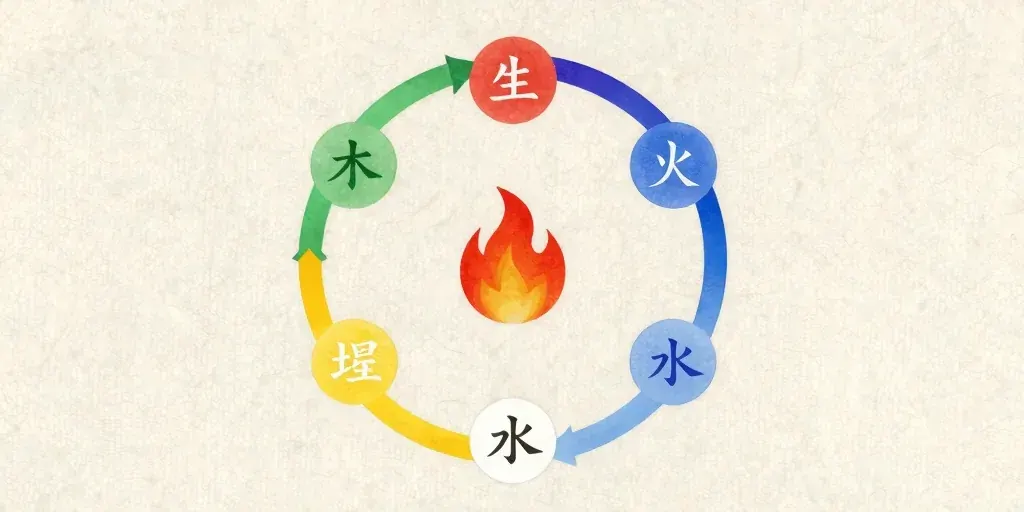
Wuxing is a map of relationships: Wood feeds Fire, Fire creates Earth, Earth bears Metal, Metal holds Water, Water nourishes Wood. There are also controlling cycles. The aim is not to “fix” yourself but to notice which element is over- or under-used and add small supports—color, food, movement, routine—to restore flow.
FAQ
What are the Five Elements in Chinese philosophy?
The Five Elements are Wood, Fire, Earth, Metal, and Water. In Chinese philosophy they describe patterns of movement, support, control, and change in nature and daily life.
What does each of the Five Elements mean?
Wood usually points to growth and flexibility, Fire to warmth and visibility, Earth to grounding and care, Metal to order and clarity, and Water to flow, depth, and reflection.
How do I know which element is out of balance?
You usually notice imbalance through repeated patterns such as restlessness, irritability, heaviness, rigidity, or fogginess. Match the feeling to the element guide, then try one small balancing action.
When each element is out of balance
Too much Wood: Restless, scattered, too many ideas. Balance with Metal: one rule, one list, one clear finish. Tidy one surface; set one boundary.
Too much Fire: Anxious, irritable, can’t wind down. Balance with Water: longer exhales, cool drink, less screen before bed. Add Earth: routine, same sleep time.
Too much Earth: Stuck, heavy, overgiving. Balance with Wood: stretch, walk, one new option. Add Metal: say no to one extra task.
Too much Metal: Rigid, critical, isolated. Balance with Fire: one warm conversation; Water: listen without fixing. Soften the edge with a break or a compliment.
Too much Water: Foggy, avoidant, lost in thought. Balance with Earth: feet on the floor, one small task done; Fire: one short burst of action or speech.
Simple daily habits per element
- Wood: Short walk in nature, or one creative block (write, draw).
- Fire: Morning light, one clear win, and a real break in the evening.
- Earth: Tidy one surface; one nourishing meal; one “no” to protect your time.
- Metal: Declutter one drawer or inbox; one rule for the day.
- Water: Hydrate; one pause before replying; one next step written down.
Element cues (mini guide)
- Wood: green, stretch, growth, flexibility.
- Fire: warm light, short sprints, clear endings.
- Earth: feet on floor, routine, one priority.
- Metal: one rule, one boundary, order.
- Water: cool, deep breath, one step.
Common mistakes
- Overcorrecting: e.g. adding only Water when Fire is high and then feeling flat.
- Ignoring the body: elements show up in sleep, appetite, and energy—notice them.
- Doing too much at once: one element, one habit, one week.
Key takeaways
- Each element has a strength; imbalance shows as too much or too little.
- Use the generating and controlling cycles to rebalance with small daily actions.
- One micro-habit per element is enough to start.
Related Guidance
Start with a practical tool: If the imbalance feels immediate, try the 3-Minute Grounding tool, the Sleep Brain Dump tool, or the Decision Reset tool. Then check Get Today's Calm for a calmer rhythm.